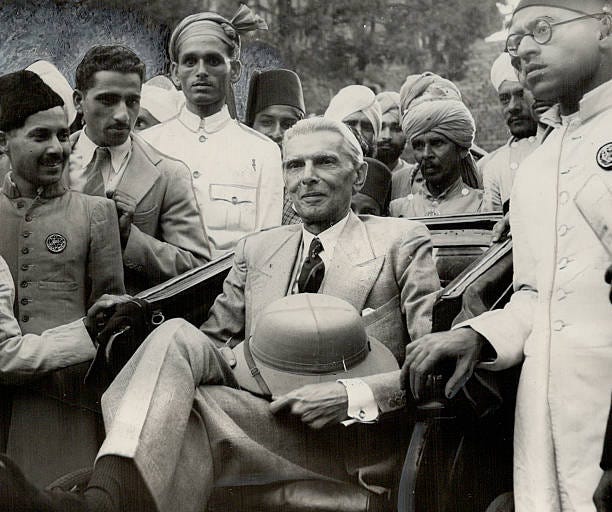
The Architect's Solitude

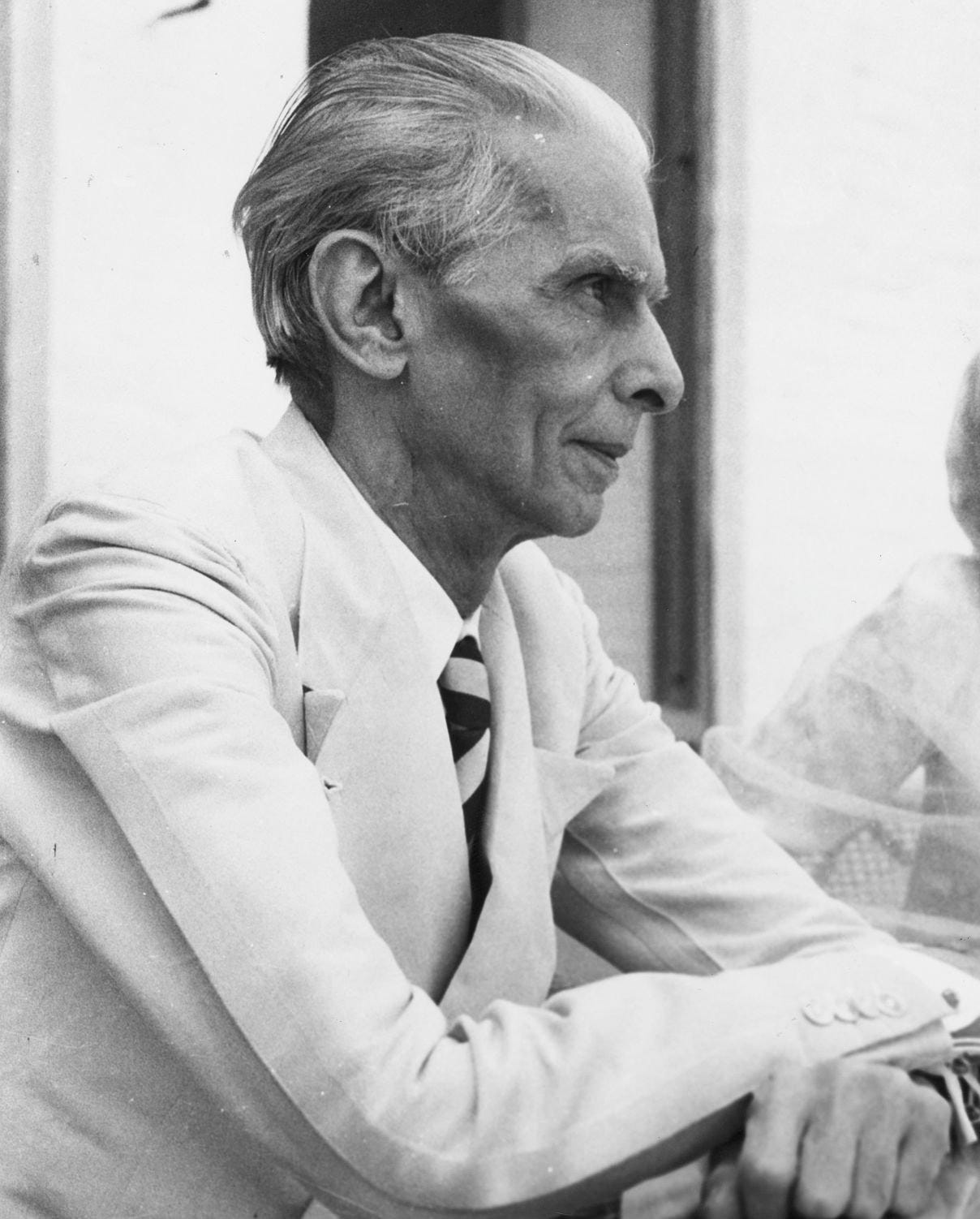
History often seeks its heroes in the grandiloquent, the charismatic, the overtly messianic—but sometimes, its architects are found in the silent, the exacting, those whose ambition is not self-aggrandisement but the pursuit of a cause that outlives them. Muhammad Ali Jinnah was such a man. He was not fashioned in the populist mold, nor swayed by sentiment, but remained—through the shifting tides of empire and revolution—a man of singular will.
The Letter That Sealed a Fate
It arrived on a cold London morning, thin parchment heavy with consequence. A few days prior, Jinnah had written home, a young man certain of his course, envisioning a life upon the stage as Romeo, where the Old Vic’s golden glow had momentarily convinced him, that destiny could be shaped by art.
"I will no longer ask for money from home," he had declared. "I will stand on my own."
Then came the reply.
His mother was gone. His wife was gone. His father, in grief, had only one thing to say: Do not be a traitor to the family.
His father’s plea echoed like a commandment in the silent room. Where many might have retreated, Jinnah found within this heartbreak the catalyst for a deeper resolve. The city that might have undone him instead became his crucible.
They said he built Pakistan alone with a typewriter. Perhaps.
But before the typewriter, there was the letter. A letter that had taken everything from him, and in doing so, had refined him into the architect of a nation.
The Refinement of the Will
He turned from the theatre and bent his mind to law—not as an occupation but as an art. Yet he did not merely study cases; he studied men, movements, and the secret architecture of power. In the British Library, where the dust of ages lay thick upon the wisdom of the ancients, he devoured Cicero’s The Offices, underlining justice, prudence, fortitude, magnanimity, moderation. They were not abstractions. They were imperatives.
John Morley’s On Compromise gave him something sterner still: the knowledge that principle is not a thing to be negotiated but upheld at all costs. He studied the Irish Home Rule movement and saw with clarity how a determined minority, unyielding in its demands, could shake an empire to its core. He observed Hyde Park’s orators, how speech—when honed to its finest edge—became a force as formidable as any army.
There was no need for approval. No space for indulgence. When he left London, it was not as the same man who had arrived.
Bombay’s Silent Courts
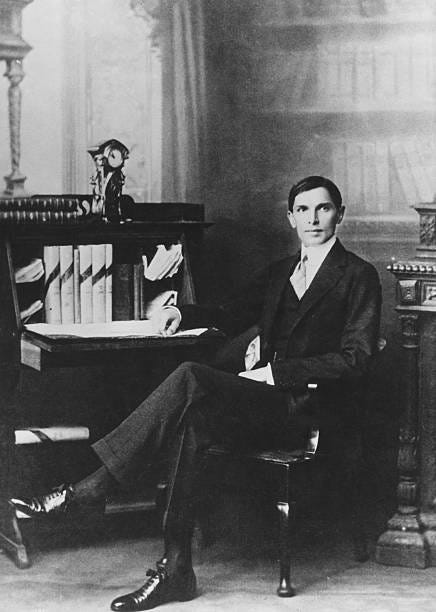
But no destiny unfolds without hardship. Bombay, with its wealth and ambition, offered him nothing at first. For four years, he walked the corridors of its courts without a case, sat in chambers without a client, endured the indignity of an empty docket. The city was indifferent, and the law, for all its supposed fairness, required more than brilliance—it demanded time, endurance, a relentless refusal to be ignored.
Others might have yielded, might have softened their edges in the name of convenience. Jinnah did not. He mastered the economy of argument, the art of silencing opponents not only with rhetoric but with the sheer force of unassailable logic. And in time, the world took notice. When briefs finally came, they were delivered not out of generosity, but because no one else could argue them better. By the time he was the highest-paid barrister in Bombay, it was not because the system had favored him. It was because he had conquered it.
The Marriage That Shook India
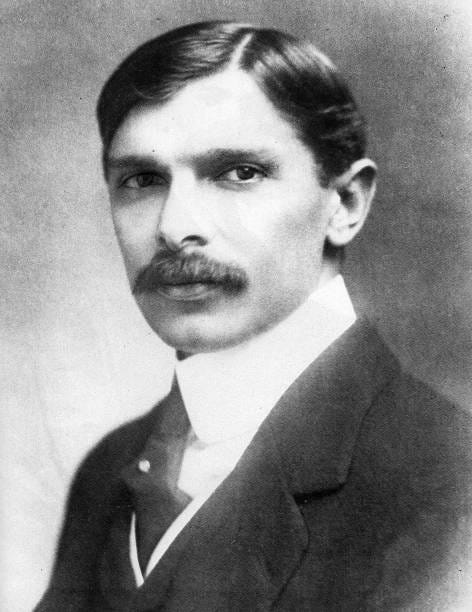
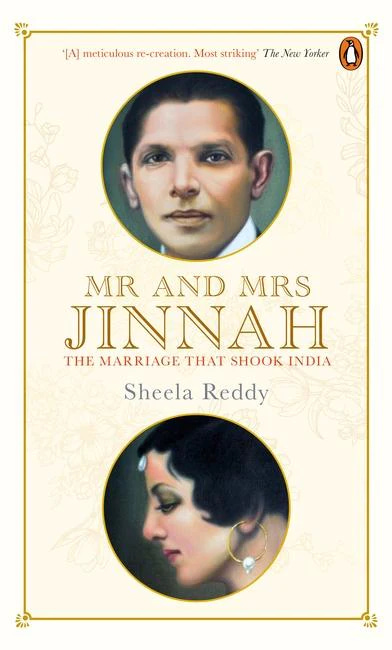
Bombay, 11 December 1918. The Great War had ended, but the empire remained. In Bombay’s Town Hall, a farewell event for Lord Willingdon was meant as a colonial victory lap—yet Jinnah’s supporters, brimming with Home Rule fervor, gathered in force. Among them was his wife, Ruttie, young and radiant, her devotion to the cause matching his own.
When an opulent tribute to the Governor commenced, Jinnah and his men rose in protest, their voices cutting through the hall: “No! No!” For twenty minutes, the protests drowned the stage. Then, the Raj struck back.
The police ordered the hall to be cleared. Officers waded in with batons. They struck Jinnah’s men as they tried to leave. Then, in an act of contempt, they roughed up Jinnah himself—shoving, striking, bruising Bombay’s most formidable lawyer.
As Jinnah stepped into the street, the city roared. Twenty-five thousand people filled Elphinstone Circle. From streets, balconies, rooftops, verandahs, handkerchiefs waved, voices rose, the people claimed him. The British had tried to silence him inside Town Hall but had only elevated him outside it.
While he fought inside, Ruttie took the battle to the streets. Denied entry, she climbed onto a soapbox at Elphinstone Circle.
“We are not slaves!” she declared. The streets erupted.
The police commissioner ordered her to stop. She refused. When words failed, they turned water hoses on her.
She was drenched but unshaken. She kept speaking, her soaked sari clinging to her, the police powerless before her defiance. A century later, historians would still write of the woman who refused to step down.
History is cruel to those who love greatly. Ruttie’s death in 1929 left Jinnah altered, his brilliance veiled by an unspoken sorrow. He did not grieve in words, but his bearing grew graver, his purpose sharpened. Love had been a battle lost—only the nation remained to win. Their marriage, like his cause, demanded sacrifice. Ruttie, untamed and incandescent, did not survive its weight. Her absence left no visible wounds, only a silence that deepened with time.
The Best-Kept Political Secret of the 20th Century
As India’s independence struggle intensified, so did Jinnah’s determination. He had once envisioned a united subcontinent built on Hindu-Muslim unity, but the elections of 1937—where Muslim interests were sidelined—hardened his stance. No longer willing to plead for what he deemed inalienable rights; he believed that petitioning power only conceded its legitimacy. If India’s Muslims were to control their destiny, they must take what they needed rather than wait for concessions.
From that point on, Jinnah worked to carve out a homeland for those he felt Congress had dismissed as mere bystanders. When the British recognised his brilliance, offering him knighthoods, governorships—even the prime ministership of an undivided India—he refused. These honours, in his eyes, were hollow if they did not guarantee genuine equality. His principle remained stark: sovereignty, not subservience.
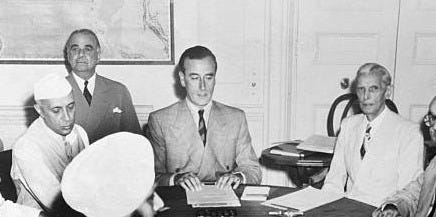
By 1940, his battle was no longer just against colonial rule but against time itself. For years, Jinnah had concealed a secret that, if exposed, might have altered history: he was dying. His struggle with tuberculosis was so well-guarded that even Lord Louis Mountbatten, the last viceroy of British India, discovered it only after Partition. “Had I known all this at the time,” Mountbatten later admitted, “the course of history would have been different… There would have been no Pakistan.”
Jawaharlal Nehru, who stood opposite Jinnah in the final negotiations, was similarly stunned upon learning the truth. One historian remarked, “The knowledge of one’s own slow demise would have broken the will of most people, but Jinnah remained unmoved. Nothing except the grave was going to turn him from the task of leading India’s Muslims at this critical juncture.” Thus, until the very last, Jinnah willed himself to endure, convinced that neither empire nor illness would keep him from realising his vision.
At the very end, he returned to his hometown, Karachi. Nothing short of the Partition of India could have brought him back.
Not as the son who had once sought his father’s approval. Not as the young man who had wandered its streets, tracing the contours of an uncertain future.
But as a man who had come to lay the final stone, to see, with his own weary eyes, the nation he had willed into being.
He remained just long enough to see it stand.
And then, as quietly as he had shaped its destiny, he was gone.
The Architect’s Solitude
There are men whom history struggles to contain.
Each faction has sought to claim Jinnah, to bind his vastness within the narrow confines of ideology. To the secularists, he is the Westernised statesman, the barrister who mastered the English tongue better than its native speakers, the man who maneuvered through the machinery of empire with effortless command. To the faithful, he is the ascetic, the one who fasted in silence, who rose before dawn in prayer, who carried within him the conviction of one destined for something beyond himself.
He is, at once, a capitalist and a socialist. A legalist and a revolutionary. To some, he is the ambassador of unity, to others, the divider of Mother India. To his detractors, he was cold, calculating. To his followers, he was unwavering, incorruptible. And to those who knew him well, he was something else entirely,
“Never was there a nature whose outer qualities provided so complete an antithesis of its inner worth,” as the Nightingale of India, Sarojini Naidu observed.
Men like Jinnah do not belong to their own time. Their people cannot yet see what they see. They do not belong to history—history is still catching up to them. They do not belong to the world they create. They must, inevitably, leave it behind.
Jinnah knew this. And as with all things, he bore it with silence.